
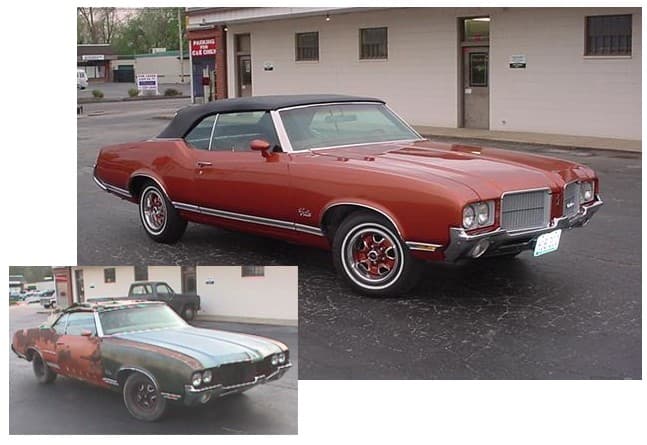
Not every mark requires the same repair
Arizona heat and ultraviolet exposure are hard on automotive finishes, but sun is only one part of the problem. Abrasive dust, automatic car washes, bird droppings, tree sap, road debris, and delayed chip repair can all affect the clear coat and color layers.
A mark that disappears when wet may be limited to the clear coat and could respond to paint correction. A scratch that catches a fingernail or exposes metal or plastic usually needs more than polishing.
Look for these differences
Swirl marks appear as fine circular scratches under direct light. Oxidation looks dull. Clear-coat failure often appears cloudy, cracked, or peeling. Rock chips are small but can expose metal and allow corrosion to begin.
- Surface transfer: material from another object sits on top of the finish.
- Clear-coat scratch: visible in reflected light without exposing color.
- Deep scratch or chip: color, primer, metal, or plastic is exposed.
- Clear-coat failure: the upper finish is lifting, peeling, or breaking apart.
Protect the area while deciding
Wash gently with automotive products, avoid aggressive household solvents, and do not sand or apply touch-up paint unless you understand the process. Improvised work can enlarge the final repair area.
Covered parking, regular gentle washing, prompt contaminant removal, and suitable paint protection can reduce exposure. For an estimate, send daylight photos of both the damage and the full panel.
Quick answers
Frequently asked questions
Can faded paint be polished back to normal?
Sometimes, if oxidation is limited and enough healthy clear coat remains. Peeling or failed clear coat generally cannot be restored by polishing alone.
Should I use rubbing compound on a scratch?
Only with care and an understanding of paint thickness. Aggressive compound can create haze or remove too much clear coat, especially on edges.